


Why CBAM matters
CBAM is designed to ensure that a carbon price is applied to the embedded emissions in certain goods imported into the EU. For affected businesses, carbon pricing therefore becomes part of the cost of importing those goods.
The exposure does not sit solely with sustainability, legal or compliance teams. It is also relevant to procurement, finance, treasury, and risk-management teams responsible for forecasting costs, managing margins, and assessing commercial risk.
What creates the exposure?
A business can face exposure when it imports in-scope goods in selected sectors – including cement, iron and steel, aluminium, fertilisers, electricity and hydrogen – and the embedded emissions in those goods create a certificate obligation.
Because CBAM certificate prices are calculated by reference to EU ETS allowance auction prices, changes in the EU carbon market can affect expected CBAM costs. The exposure may be particularly relevant for businesses with recurring imports, material volumes, or long procurement and pricing cycles.
How carbon price movements can affect CBAM costs
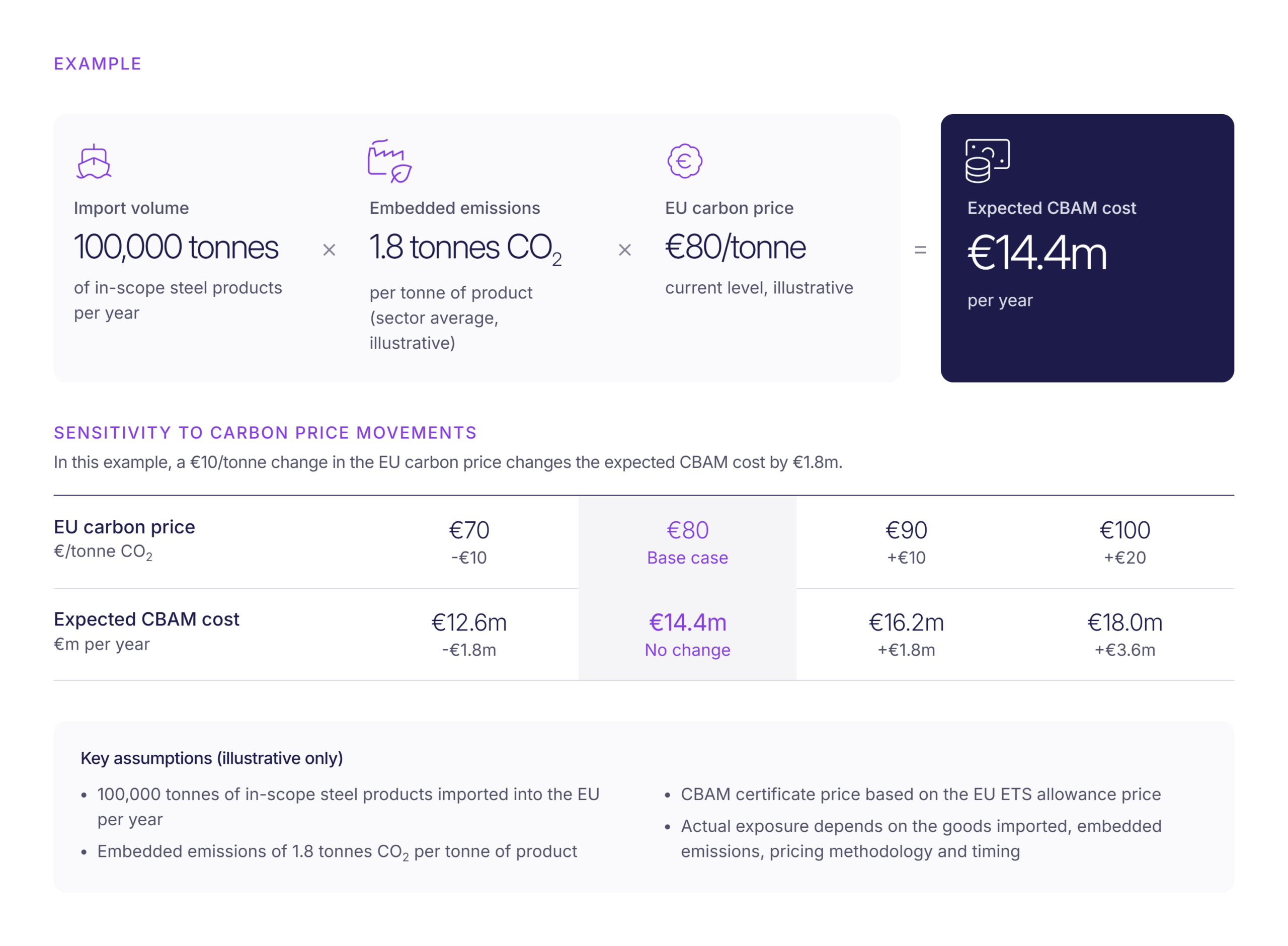
A change in the EU carbon price changes the expected CBAM cost for an importer. This is a simplified, hypothetical example for illustrative purposes only.
How Marex Hedging Solutions Can Help
Marex can help businesses assess how movements in the EU carbon price could affect their expected CBAM costs and explore tailored bilateral over-the-counter (OTC) hedges aligned with the size, timing and relevant pricing period of the exposure.
These structures can be designed to help manage carbon-price volatility, improve cost visibility and reduce the impact of adverse price movements on budgets and margins.
Hedging does not replace CBAM compliance. Accurate import and emissions data remain essential, and a hedge may not eliminate differences between forecast and actual volumes, timing, embedded emissions or certificate costs.
